

ADHD, Autism & Neurodivergence in Dallas
You may have spent years trying harder when what you really needed was to understand how your brain works.
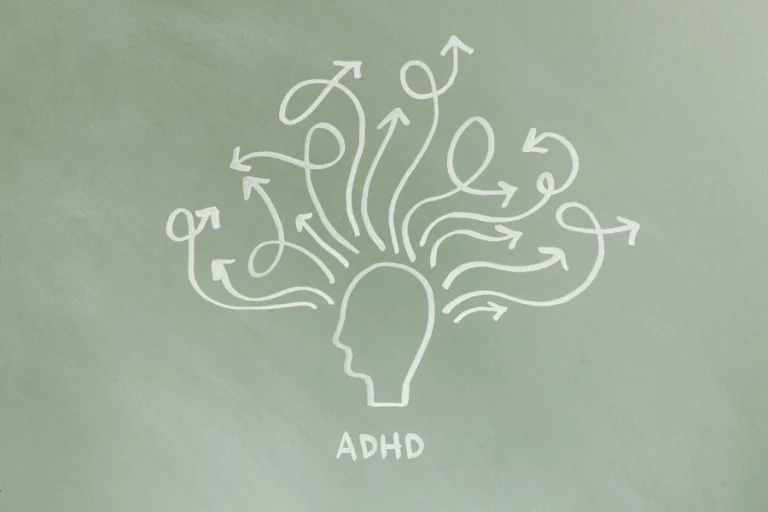
Dallas ADHD Therapist, Autism Therapist & Neurodivergence Therapist
Maybe you can focus intensely on something that interests you but struggle to start a relatively simple task. You might procrastinate until the last possible minute, lose track of appointments, forget what you walked into a room to do, or feel perpetually behind despite working incredibly hard to stay on top of things.
Or maybe you have always felt a little different. Social situations may require more effort than other people seem to realize. You might become overwhelmed by noise, crowds, interruptions, or changes in plans. Perhaps you’ve developed elaborate systems to stay organized, learned to hide when you’re struggling, or become so accustomed to compensating that other people have no idea how much effort everyday life requires.
At PHHW, our ADHD therapists in Dallas work with adults and adolescents with ADHD, autism, and other forms of neurodivergence. Some of our patients have known about their diagnosis for years. Others begin therapy wondering for the first time whether ADHD, autism, or another difference in how their brain processes the world might help explain patterns they’ve struggled with throughout their lives.
Understanding how your brain works isn’t about finding an excuse for your difficulties. It’s about replacing years of frustration and self-criticism with better understanding—and finding strategies that actually work for you.
ADHD: When Knowing What to Do Isn’t the Same as Being Able to Do It
Attention-deficit/hyperactivity disorder, or ADHD, is a neurodevelopmental condition that affects attention, impulse control, activity level, motivation, organization, and executive functioning.
Despite its name, ADHD isn’t simply an inability to pay attention.
Many people with ADHD can concentrate extremely well under certain circumstances—particularly when something is interesting, novel, urgent, or personally meaningful. The difficulty is often regulating attention: directing it where it needs to go, shifting it when necessary, and sustaining it when a task isn’t naturally engaging.
This can create a frustrating experience in which you know exactly what you should be doing but have tremendous difficulty making yourself do it.
Over time, that disconnect can become deeply personal. You may have been told that you’re lazy, careless, disorganized, irresponsible, overly emotional, or simply not trying hard enough. Eventually, you may have started telling yourself the same things.
ADHD therapy can help separate these long-standing judgments about yourself from the actual difficulties you are experiencing. A PHHW Dallas ADHD therapist can help.
What Are the Symptoms of ADHD?
ADHD looks different from person to person, and its presentation can change across different stages of life.
- Have difficulty starting tasks, even when they’re important
- Procrastinate until urgency creates enough pressure to act
- Become easily distracted or pulled away from what you’re doing
- Frequently lose or misplace things
- Forget appointments, deadlines, or responsibilities
- Struggle to estimate how long something will take
- Consistently run late despite trying not to
- Start projects enthusiastically but have difficulty finishing them
- Feel overwhelmed when a task involves multiple steps
- Have difficulty prioritizing when everything feels equally important
- Interrupt others or say things before you’ve had time to think
- Become restless or uncomfortable when you have to remain still
- Find your mind constantly moving from one thought to another
- Hyperfocus on something interesting and lose track of time
- Feel unusually sensitive to frustration, criticism, or rejection
- Have difficulty transitioning between activities
- Need pressure or a deadline in order to become productive
- Feel chronically disorganized despite working hard to stay organized
For many adults, ADHD doesn’t look like the stereotypical image of a child who can’t sit still.
It may look like having 25 browser tabs open, forgetting to respond to a text you fully intended to answer, staying up until 2:00 a.m. finishing something you had all week to complete, or feeling completely overwhelmed by a seemingly ordinary list of errands.
You may be functioning well by most external measures while privately feeling that keeping your life together requires far more effort than it should. Let a ADHD therapists in Dallas assist.
ADHD and Executive Functioning
Many of the difficulties associated with ADHD involve executive functioning—the mental processes that help us organize, plan, prioritize, remember information, regulate emotions, manage time, and translate intentions into action.
When these skills are inconsistent, everyday responsibilities can become surprisingly difficult.
You may know that an email will take three minutes to answer and still avoid it for three days. You may create an excellent organizational system and stop using it a week later. You may understand exactly how much better you’ll feel after completing something while still feeling unable to begin.
These experiences can be particularly confusing for intelligent, capable people. When you are able to perform exceptionally well in some areas but repeatedly struggle with seemingly simple tasks in others, it’s easy to conclude that the problem must be motivation, discipline, or character.
Understanding executive functioning can help you stop asking, “Why can’t I just make myself do this?” and start asking a more useful question: “What is making this difficult, and what would make it easier for my brain to do?”
ADHD in Women and High-Achieving Adults
ADHD can be overlooked for years, particularly in people who performed well academically, were not disruptive as children, or became skilled at compensating for their difficulties.
This is especially common among women.
Instead of obvious hyperactivity or behavioral problems, ADHD may show up as chronic disorganization, daydreaming, procrastination, perfectionism, emotional sensitivity, forgetfulness, or a persistent sense of being overwhelmed.
Some people compensate by becoming extraordinarily organized or achievement-oriented. They rely on anxiety, perfectionism, extensive lists, rigid routines, or enormous amounts of effort to make sure nothing falls through the cracks.
From the outside, they may appear highly successful.
Internally, they may feel exhausted.
You may have earned advanced degrees, built a successful career, raised a family, or accomplished things that seem inconsistent with having ADHD. None of those things necessarily rule it out. The more important question is often how much effort, stress, and compensation it has taken to function at that level.
For some adults, recognizing ADHD later in life brings both relief and grief: relief that there may finally be an explanation, and grief over years spent believing they were simply failing at things that seemed easier for everyone else.
Autism Spectrum Disorder: A Different Way of Experiencing and Interacting With the World
Autism spectrum disorder, or autism, is a neurodevelopmental condition that affects how a person communicates and interacts socially and is also associated with patterns of restricted or repetitive behaviors, interests, activities, or sensory experiences.
The word spectrum is important.
Autism doesn’t look the same in every person, and it isn’t simply a continuum from “a little autistic” to “very autistic.” Two people with the same diagnosis may have very different strengths, challenges, and support needs.
One person may need substantial assistance with communication and everyday functioning. Another may earn advanced degrees, have a successful career, maintain relationships, and live independently while still experiencing meaningful difficulties with social communication, flexibility, sensory processing, or the demands of navigating a world that often feels designed for someone else’s brain.
This variability is one reason autism can sometimes go unrecognized until adolescence or adulthood.
ADHD, Autism, Neurodivergence Dallas Therapists
What Are the Signs of Autism?
Autism can present differently depending on the individual, age, environment, and the ways a person has learned to adapt over time.
You might:- Find social interactions confusing, effortful, or exhausting
- Have difficulty knowing what other people expect from you socially
- Prefer direct communication and struggle with ambiguity or unspoken expectations
- Have difficulty interpreting tone, facial expressions, sarcasm, or subtle social cues
- Rehearse conversations in advance or replay them afterward
- Feel as though you’ve had to consciously learn social rules that seem intuitive to other people
- Have intense or highly focused interests
- Become deeply absorbed in particular subjects or activities
- Prefer routines and predictability
- Find unexpected changes disproportionately stressful
- Experience strong reactions to particular sounds, textures, lights, smells, foods, or environments
- Seek out particular sensory experiences or repetitive movements
- Feel overwhelmed in crowded, noisy, or highly stimulating environments
- Need significant time alone to recover after social interaction
- Have difficulty identifying, describing, or communicating what you’re feeling
- Feel as though you’ve spent much of your life being slightly “out of step” with other people
No single item on this list means someone is autistic.
Many of these experiences occur in people without autism, and several overlap with ADHD, anxiety, trauma, and other concerns. What matters diagnostically is the broader pattern, including developmental history and how these characteristics have affected functioning over time. At PHHW, our autism therapists in Dallas work with adults and adolescents with ADHD, autism, and other forms of neurodivergence.
Autism Is a Spectrum: Understanding Levels 1, 2, and 3
Autism is currently diagnosed as Autism Spectrum Disorder (ASD). The diagnosis includes three levels that describe the amount of support an individual may require.
Level 1: Requiring Support
Individuals diagnosed with Level 1 autism may be relatively independent but experience meaningful difficulties with social communication, flexibility, transitions, organization, or adapting to change. Without appropriate support, these differences can interfere with relationships, school, work, or daily life.
People with Level 1 autism are sometimes overlooked because their difficulties may not be immediately apparent to others. This can be especially true for individuals who are academically successful, verbally skilled, or adept at masking their differences.
Level 2: Requiring Substantial Support
Individuals with Level 2 autism generally experience more noticeable differences in social communication and greater difficulty with flexibility, transitions, or restricted and repetitive behaviors. These challenges typically remain apparent even when supports are in place and may significantly affect everyday functioning.
Level 3: Requiring Very Substantial Support
Individuals with Level 3 autism generally have significant differences in verbal and/or nonverbal social communication and substantial difficulty with flexibility, changes in routine, or restricted and repetitive behaviors. They typically require considerable ongoing support in daily life.
These levels can be useful for describing support needs, but they don’t capture everything about an individual.
A person may have significant difficulty in one area and function quite independently in another. Support needs can also change depending on environment, stress, developmental stage, and the demands being placed on the person. A diagnostic level should therefore not be treated as a shorthand description of someone’s intelligence, personality, potential, or overall functioning.
What Happened to Asperger’s Syndrome?
Some adults wonder whether they could have Asperger’s syndrome, particularly if that was the terminology used when they were younger.
Asperger’s is no longer a separate diagnosis in the current Diagnostic and Statistical Manual of Mental Disorders (DSM-5-TR). In 2013, several previously separate diagnoses—including Asperger’s disorder and autistic disorder—were brought together under the broader diagnosis of Autism Spectrum Disorder.
As a result, someone who might previously have received a diagnosis of Asperger’s may now meet criteria for Autism Spectrum Disorder, often with Level 1 support needs.
Some people who were originally diagnosed with Asperger’s continue to identify with that term, and it remains part of how many people understand their own history. Others prefer “autistic,” “on the autism spectrum,” or another description.
The change in terminology reflects an important idea: autism encompasses a wide range of presentations rather than several completely separate conditions.
Autism in Adults: Why Can It Be Missed?
For many people, the stereotypical image of autism bears little resemblance to their own life.
They may have friendships and romantic relationships. They may be successful academically or professionally. They may make eye contact, understand humor, enjoy being social, or be highly empathic.
None of these things automatically rules out autism.
Over time, some autistic people become highly skilled at observing social behavior and consciously adapting themselves to fit expectations. They may learn when to make eye contact, prepare topics for conversation, imitate other people’s expressions or mannerisms, suppress repetitive behaviors, or carefully monitor how they’re being perceived.
This can make autism less visible to other people while making everyday interaction significantly more demanding for the individual.
Some adults describe realizing that they weren’t intuitively navigating social situations so much as becoming extremely good at studying them.
For someone who has spent years wondering why relationships, sensory experiences, transitions, or ordinary social demands seem to require so much effort, recognizing autism can provide an entirely different framework for understanding their life.
ADHD and Autism: Can You Have Both?
Yes. ADHD and autism are distinct neurodevelopmental conditions, but they can occur together.
In fact, some people don’t recognize one until they begin understanding the other.
There can also be considerable overlap in how ADHD and autism appear in everyday life. Both can involve executive functioning difficulties, emotional regulation challenges, sensory differences, social difficulties, intense interests, difficulty with transitions, or feeling overwhelmed by everyday demands.
At the same time, the underlying reasons for similar-looking behaviors may be quite different.
For example, someone with ADHD may struggle with a routine because maintaining consistency is difficult, while an autistic person may rely heavily on routine because predictability helps them regulate and understand what to expect. A person with both may experience both patterns.
This is one reason careful assessment can be helpful. The goal isn’t simply to decide which label fits. It’s to develop a more accurate understanding of how the individual thinks, processes information, relates to others, and functions across different parts of life.
Connect with the right therapist.
Neurodivergence: Understanding a Brain That Works Differently
Neurodivergence is a broad term used to describe people whose brains function or process information differently from what is considered neurologically typical.
ADHD and autism are two of the conditions most commonly described as forms of neurodivergence, although the term can be used more broadly.
Being neurodivergent doesn’t mean that every difficulty you experience should be attributed to your brain—or that every difference needs to be “fixed.” It does mean that understanding your individual patterns can provide important context for experiences that may otherwise feel confusing.
You might notice differences in the way you process sensory information, communicate, organize yourself, experience emotions, manage transitions, or interact socially.
You may also have considerable strengths associated with the way you think: creativity, curiosity, intense focus, pattern recognition, attention to detail, unconventional problem-solving, or an ability to become deeply knowledgeable about subjects that interest you.
Therapy isn’t about turning a neurodivergent person into a neurotypical one.
It’s about understanding where your natural way of functioning works well for you, where it creates difficulty, and how to build a life that takes both into account.
When You’ve Spent Years Masking or Compensating
Some neurodivergent people become extremely skilled at hiding areas in which they’re struggling.
You may carefully observe other people to figure out how you’re expected to behave. You might rehearse conversations before they happen, imitate social behaviors that seem to come naturally to others, force yourself through overwhelming environments, or create extensive systems to compensate for difficulties with attention and organization.
This is sometimes described as masking.
Masking can be useful. It may help you navigate school, work, relationships, and social expectations. But constantly monitoring and adjusting yourself can also be exhausting.
You may get through a workday or social event successfully and then feel completely depleted afterward. You may appear calm while internally feeling overwhelmed. Other people may describe you as highly capable while you privately wonder why ordinary life seems to require so much effort.
Therapy can provide a place to understand which adaptations are useful and which may be costing you more than they’re helping.
The goal isn’t necessarily to stop compensating. It’s to become more intentional about when you need to adapt, when your environment can adapt to you, and when you can simply allow yourself to function differently.
ADHD, Autism, Anxiety, and Self-Esteem
They’re seeking therapy because of what years of struggling—or feeling different—have taught them to believe about themselves.
Repeatedly forgetting things, disappointing people, misunderstanding social situations, missing deadlines, feeling overwhelmed, struggling to follow through, or sensing that you’re somehow out of step with other people can gradually erode your confidence.
You may become anxious because you’ve learned that if you aren’t constantly vigilant, something will fall through the cracks. You may become a perfectionist because mistakes feel particularly threatening. You may avoid tasks or social situations because they bring up years of frustration, uncertainty, or anticipated failure.
You may also become extremely sensitive to criticism because criticism confirms something you already fear: that you’re irresponsible, difficult, disappointing, or somehow not doing enough.
Therapy can help untangle the challenges associated with ADHD or autism from the conclusions you’ve drawn about your character.
You can take responsibility for the impact of your behavior without turning every difficulty into evidence that something is wrong with you.
ADHD, Autism, and Relationships
Neurodivergence doesn’t exist only at school or work. It can also affect romantic relationships, friendships, and family dynamics.
A partner may experience forgotten tasks or unfinished responsibilities as a lack of caring. Someone with ADHD may experience repeated reminders as criticism or control. An autistic person may communicate or express emotion differently than a partner expects, leading one or both people to misunderstand the other’s intentions.
Over time, people can become stuck in patterns that have very little to do with how much they actually care about each other.
ADHD and autism can also affect communication in different ways. You might interrupt because you’re afraid you’ll forget what you wanted to say, become distracted during an important conversation, need more time to process what you’re feeling, interpret language more literally, become overwhelmed during conflict, or struggle to communicate your needs in a way another person understands.
Understanding the role neurodivergence plays doesn’t eliminate accountability. It can, however, make it easier to solve the actual problem rather than repeatedly assigning negative motives to one another.
What Does ADHD Therapy Look Like?
Effective ADHD therapy isn’t simply about teaching you to use a planner.
At PHHW, ADHD therapy begins with understanding how ADHD affects you—your work, relationships, emotions, routines, self-esteem, and ability to accomplish the things that matter to you.
Treatment may involve developing practical strategies for organization, planning, time management, task initiation, and follow-through. But ADHD therapy may also address the emotional consequences of living with ADHD: anxiety, perfectionism, shame, low self-esteem, relationship difficulties, or the persistent feeling that you’re failing to live up to your potential.
Your ADHD therapist may help you recognize patterns that repeatedly create problems, identify environmental changes that make functioning easier, develop realistic systems rather than idealized ones, and challenge long-standing beliefs about yourself.
The goal isn’t perfect productivity.
It’s to help you understand yourself well enough to create strategies that are realistic, sustainable, and compatible with the way your brain actually works.
What Does Therapy for Autistic Adults Look Like?
Therapy for autism shouldn’t be based on the assumption that an autistic person needs to learn how to appear less autistic.
Instead, austism therapy can help you better understand your own patterns, needs, strengths, and areas of difficulty.
That might involve working on emotional regulation, relationships, communication, executive functioning, anxiety, sensory overwhelm, boundaries, self-esteem, or navigating work and social environments. Austism therapy may also help you distinguish between adaptations that are useful and masking behaviors that have become exhausting or harmful.
For adults diagnosed later in life, austism therapy may involve making sense of the diagnosis itself.
Looking back through a new lens can bring relief, validation, sadness, anger, or some combination of all of them. Experiences that once seemed like personal failures may suddenly make more sense. At the same time, you may find yourself reconsidering how much energy you’ve spent trying to meet expectations that weren’t designed around the way you naturally function.
The goal isn’t to reduce you to a diagnosis.
It’s to understand you more accurately—and use that understanding to help you build a life and relationships that work better for you.
Do I Need an ADHD or Autism Diagnosis Before Starting Therapy?
No.
Some people come to PHHW with a diagnosis they received in childhood. Others were diagnosed as adults. Still others arrive wondering whether ADHD, autism, or another form of neurodivergence might explain experiences they’ve never fully understood.
You don’t need to diagnose yourself before coming to therapy.
ADHD therapy, autism therapy, or other forms of neurodivergence therapy can be useful whether you’re formally diagnosed, questioning a diagnosis, or simply recognizing patterns in yourself that you want help understanding.
When a formal diagnosis would be useful, psychological assessment can provide greater clarity. PHHW offers psychological testing for concerns including ADHD and autism, as well as cognitive and personality assessment when clinically appropriate. An evaluation can help distinguish ADHD or autism from other concerns that can sometimes produce overlapping symptoms and can provide individualized recommendations based on the findings.
For some people, the most valuable part of assessment is finally having a clearer framework for understanding themselves.
Finding the Right ADHD or Autism Therapist in Dallas
Finding a therapist who understands ADHD, autism, and neurodivergence matters.
You don’t want every difficulty attributed to a diagnosis. But you also don’t want to spend therapy repeatedly being given advice that assumes your brain works differently than it does.
At PHHW, our therapists work with adolescents and adults experiencing ADHD, autism, executive functioning difficulties, and other forms of neurodivergence. We also frequently work with the concerns that accompany them, including anxiety, depression, perfectionism, low self-esteem, relationship difficulties, academic or professional stress, and questions about identity.
Treatment is individualized. For one person, therapy may focus heavily on executive functioning and creating more effective systems. For another, the more important work may involve relationships, emotional regulation, sensory overwhelm, anxiety, self-esteem, masking, or understanding a diagnosis received later in life.
If you’re searching for an ADHD therapist in Dallas, autism therapist in Dallas, ADHD therapy in Dallas, autism therapy in Dallas, therapy for neurodivergent adults, executive functioning therapy, ADHD testing, autism assessment, or adult autism testing in Dallas, PHHW can help connect you with a therapist whose experience and approach fit what you’re looking for.
You don’t need to become better at forcing yourself to function like everyone else.
You can become better at understanding how you function—and build from there.